Showing posts with label Wine. Show all posts

Friday, June 16, 2023

Inca - Mallorca, a way of life


If one day you have the chance to go to the Balearic Islands, you must take the time to spend a day strolling around the center of the island of Mallorca and stop in the town of Inca for a coffee. and read the local newspaper Plaça Santa Maria la Major at Café Can Pedro. 


Obviously, there is no question of leaving the city without going to dinner at Celler Can Ripoll where you can taste excellent Mallorcan cuisine and, I recommend, drink a delicious bottle of José L. Ferrer crianza wine.


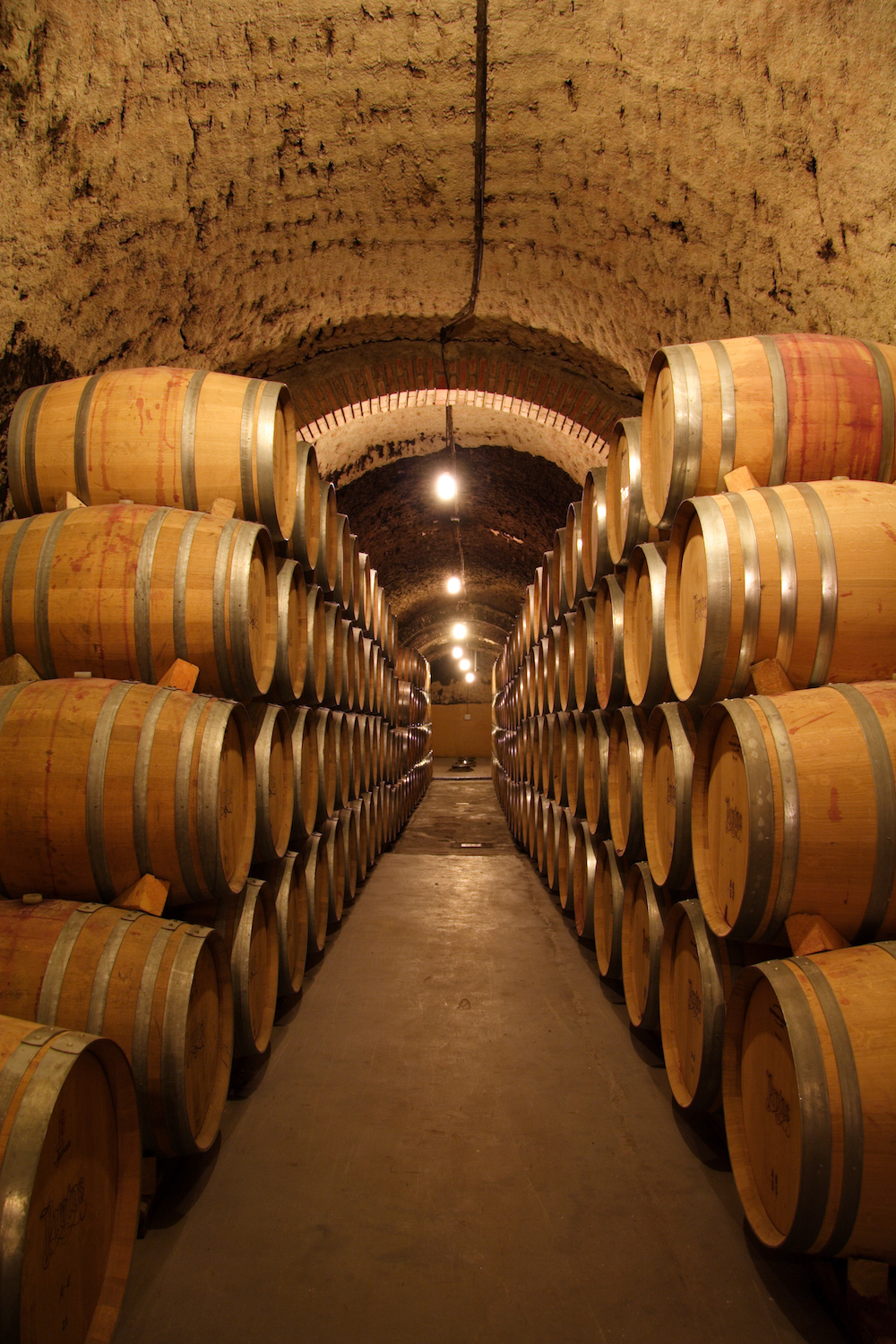
A Celler is a Catalan word that refers to the place where wine is traditionally made and stored. It is also the name given in Mallorca to a typical restaurant, generally installed in old cellars.


The Celler Can Ripoll is in the center of Inca and is a national heritage building that began as a wine cellar in 1768. In the beginning, Inca workers came there to have a drink and to fill their jugs of wine. Then, in the mid-1940s, the winery began serving food.


About José L. Ferrer wine. In 1931, aged 28, José L. Ferrer founded this winery under the name Vinícola de Binissalem. Today, the winery is still managed by the family, specifically, by José L. Roses, grandson of the founder, who worked from an early age alongside his grandfather, and his children María and Pepe, who have been taking great care of the management of the winery ever since they began just like their forebears, working each day to ensure that the years of family tradition and innovation continue to make the history of Bodegas José L. Ferrer unique.

Friday, February 10, 2023

My Ever Favorite Wines #2


I had the chance to taste what are, for me, the best wines in the world. Of course, it's better not to look at the prices but just close your eyes and taste... but if I can recommend a fabulous and affordable wine, run and buy a bottle of Connétable Talbot or Moulin de La Lagune, you won't regret it.


Château Talbot
: Château Talbot is a winery in the Saint-Julien appellation of the Bordeaux region of France. Château Talbot is also the name of the red wine produced by this property. It was classified as one of ten Quatrièmes Crus Classés (Fourth Growths) in the Bordeaux Wine Official Classification of 1855. The Château used to be the property of Sir John Talbot, Governor of Aquitaine, Earl of Shrewsbury, in the 15th century. The property belonged to the Marquis of Aux for several decades, receiving its first Cocks & Féret lists in 1846 and 1855 and fourth growth classification in 1855, was then bought by Monsieur A. Claverie in 1899, before being acquired by Désiré Cordier in 1917. His son Georges, then his grandson Jean inherited the property and since his death in 1993 the present owners are his daughters Lorraine Rustmann and Nancy Bignon-Cordier, the fourth generation of the Cordier family. The vineyard area of Chateau Talbot extends 102 hectares (250 acres), located a short distance from the Gironde estuary, is among the largest in Bordeaux. The vineyard is on fine gravelly rises, which are well drained. The distribution of red wine grape varieties is 68% Cabernet Sauvignon, 28% Merlot and 4% Petit Verdot.


Château La Lagune
: Château La Lagune is a winery in the Haut-Médoc appellation of the Bordeaux region of France. The wine produced here was classified as one of fourteen Troisièmes Crus (Third Growths) in the historic Bordeaux Wine Official Classification of 1855. Rescued from dereliction in 1954 by Georges Brunet, La Lagune was subsequently sold to the Ducellier family of Champagne Ayala. In 2000, both La Lagune and Champagne Ayala were sold to the Frey family. Ayala was then sold to the House of Bollinger, and the Frey family acquired Maison Jaboulet in the Rhone. The Freys are also a substantial but not majority shareholders of Billecart-Salmon, the producer in Mareuil-sur-Aÿ. Located in the commune of Ludon, La Lagune has 72 hectares (180 acres) under vine with a grape variety distribution of 60% Cabernet Sauvignon, 20% Merlot, 10% Cabernet Franc, and 10% Petit Verdot.


Château Léoville-Poyferré
: Château Léoville-Poyferré is a winery in the Saint-Julien appellation of the Bordeaux region of France. Château Léoville-Poyferré is also the name of the red wine produced by this property. The wine produced here was classified as one of fifteen Deuxièmes Crus (Second Growths) in the original Bordeaux Wine Official Classification of 1855. Léoville-Poyferré was once part of the much larger Léoville estate until the time of the French Revolution when it was separated into Château Léoville-Las Cases and Château Léoville-Barton. In 1840, Château Léoville-Las Cases was again divided forming Château Léoville-Poyferré which went to Baron de Poyferré when he married the daughter of Jean de Las-Cases.


Château Ducru-Beaucaillou
: Château Ducru-Beaucaillou is a winery in the Saint-Julien appellation of the Bordeaux region of France. Château Ducru-Beaucaillou is also the name of the red wine produced by this property. The wine produced here was classified as one of fifteen Deuxièmes Crus (Second Growths) in the original Bordeaux Wine Official Classification of 1855. The estate Château Ducru-Beaucaillou was purchased by Francois Borie in 1941 and has remained in the family since then. The family also owns other estates, Château Grand-Puy-Lacoste and Château Haut-Batailley. In the mid-1980s the estate battled an infestation of TCA in their cellars that marred several vintages including the 1988, 1989, and 1990. The Chateau has since corrected the problem, and today the wines are fermented and aged in a new underground cellar created in the late 1990s. Today the estate is managed by Bruno Borie. Ducru-Beaucaillou's vineyards consist of 50 hectares of well-drained gravel with stones up to 2.5 inches in diameter. (beaucaillou means "beautiful stones".) The vineyards are planted in Cabernet Sauvignon (70%) and Merlot (30%); previous plantings of Cabernet Franc and Petit Verdot having been uprooted. The vines' average age in 2005 was 38 years. 

Friday, January 27, 2023

My Ever Favorite Wines


I had the chance to taste what are, for me, the best wines in the world. Of course, it's better not to look at the prices but just close your eyes and taste... but if I can recommend a fabulous and affordable wine, run and buy a bottle of Protos Crianza, you won't regret it.


Alion: Alión, whose name refers to the region of León where the patriarch of the Álvarez family was born, is located just 15 kilometers from the headquarters and in a very similar place, between the Duero river and the Valladolid motorway in Soria , near The wine capital of La Ribera, Peñafiel. Even though the first vintages of this wine were made in the facilities of Vega Sicilia, a new philosophy was applied to a wine that could not only be the "junior partner" of the legendary great wine, but which had to be able to stand in its own and highlight the virtues of the terroirs, the climate and the typical varieties of the Ribera del Duero.


Pingus: Dominio de Pingus is a Spanish winery located in Quintanilla de Onésimo in the province of Valladolid with vineyards in the La Horra region of the Ribera del Duero region. The estate's flagship wine, Pingus, is considered a "cult wine", sold at extremely high prices. The winery also produces a second wine, Flor de Pingus, and a special cuvée, Ribera del Duero "Amelia". Recently Dominio de Pingus founded a joint project with local grape growers to make a more affordable and older vine tempranillo called "PSI".


Protos: A legend born in 1929, the pillars on which Protos was built must lead the way. Quality as a top priority and their brand as a sustainable competitive advantage. Proof of this importance comes from their first vintages (1927 & 1928), which won gold medals at the Universal Exhibition in Barcelona in 1929. In 1986, a cellar was built in Anguix (Burgos), surrounded by old high quality vineyards. Therefore, allowing for a shorter travel time between the vineyard and this winery. In 2008, Protos, true to its roots and in step with an ever-changing industry, built a new state-of-the-art winery in Peñafiel. This magnificent installation was designed by the prestigious architectural firm Rogers Stirk Harbor + Partners (led by genius architect, Richard Rogers, Priztker Prize in Architecture, 2007) in collaboration with Alonso Balaguer y Arquitectos Asociados. Blending the know-how of their long history with new technologies that help them continue to produce better and more sustainable wines.


Vega Sicilia
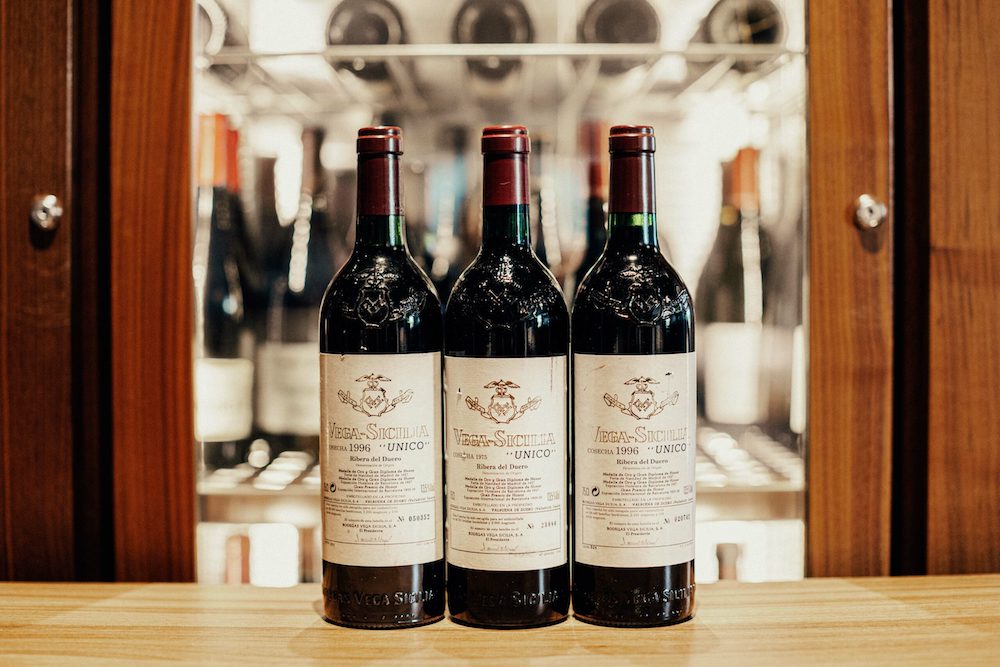
: Bodegas Vega Sicilia is a spanish winery located in the heart of the Ribera del Duero appellation in northern Spain. In 1848 a Basque landowner, Don Toribio Lecanda, after meeting the Marquis of Valbuena, who was bankrupt, bought one of his estates from him. Located in the western part of the Ribera del Duero wine region, the Pago de la Vega Santa Cecilia y Carrascal covered 2,000 hectares. Subsequently this name was shortened to Vega Sicilia. The Vega Sicilia company was created in 1864. The first grape varieties planted were Cabernet Sauvignon, Merlot, Malbec, and Tinto Fino. The Álvarez family bought Vega Sicilia in 1982 from the Venezuelan businessman Hans Neumann who had acquired the estate in the 1960s. In the same year (1982), Ribera del Duero obtained the controlled designation of origin (Denominación de Origen). In comparing the wines of Spain to the First Growth wines of Bordeaux, wine expert Hugh Johnson, after comparing Rioja producers Marqués de Riscal and Marqués de Murrieta to Château Lafite Rothschild and Château Mouton Rothschild, respectively, stated: "Vega Sicilia is the Latour; but Latour of a vintage that has raisined the grapes and fried the picking crews."—a reference to the significantly warmer climate and different growing conditions of the Ribera del Duero. 

Sunday, May 25, 2014

My Favorite Wine # 1 : Vega Sicilia

.


Bodegas Vega Sicilia is a Spanish winery located in the Ribera del Duero Denominacion de Origen in Valladolid, Castilla y León North of Spain. The "Vega Sicília" wine is well known as one of the most notable Spanish wines. The winery was founded in 1864 by Don Eloy Lecanda y Chaves, who planted various grapes from the Bordeaux wine region of France, including Cabernet Sauvignon and Merlot, which are still being used in the wines today. Since 1982, the same year that the Ribera del Duero was granted Denominación de Origen (DO) status, the winery has been owned by the Alvarez family who are members of the Primum Familiae Vini. In comparing the wines of Spain to the First Growth wines of Bordeaux, wine expert Hugh Johnson, after comparing Rioja producers Marques de Riscal and Marques de Murrieta to Château Lafite Rothschild and Château Mouton Rothschild, respectively, noted that "Vega Sicilia is the Latour; but Latour of a vintage that has raisined the grapes and fried the picking crews." a reference to the significantly warmer climate and different growing conditions of the Ribera del Duero.